

Escargots géants africains avancés
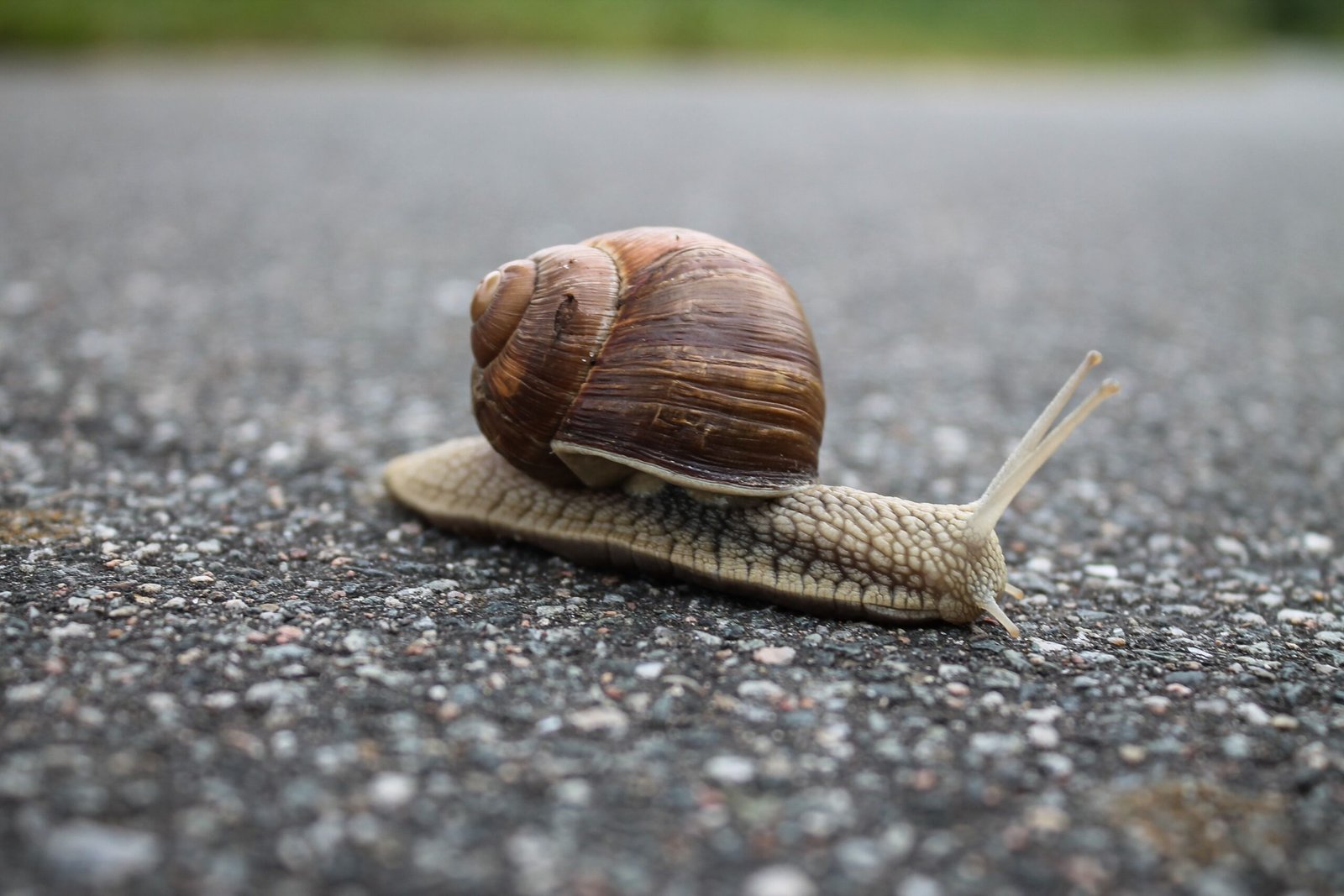
Passage de lecture
Les escargots géants africains figurent parmi les plus grands escargots terrestres du monde. massif Ces créatures peuvent atteindre une vingtaine de centimètres de long, soit environ la taille d'une main d'adulte. Originaires d'Afrique de l'Est, elles se sont répandues dans de nombreux pays du monde. Leurs carapaces brunes présentent de magnifiques motifs. spirale Des motifs qui leur permettent de se fondre dans le sol forestier. Les scientifiques étudient ces escargots pour en apprendre davantage sur invertébrés et comment les animaux s'adaptent à de nouveaux environnements.
Ces escargots sont nocturne Ce sont des animaux, ce qui signifie qu'ils sont surtout actifs la nuit. Le jour, ils se cachent sous les feuilles et les pierres pour rester au frais et à l'humidité. Ils se nourrissent de plus de cinq cents espèces de plantes différentes, ce qui les rend très… adaptable mangeurs. Les escargots géants africains raffolent des fruits, des légumes et même de l'écorce des arbres. appétit leur taille est telle que les agriculteurs les considèrent comme des ravageurs dangereux dans de nombreux pays.

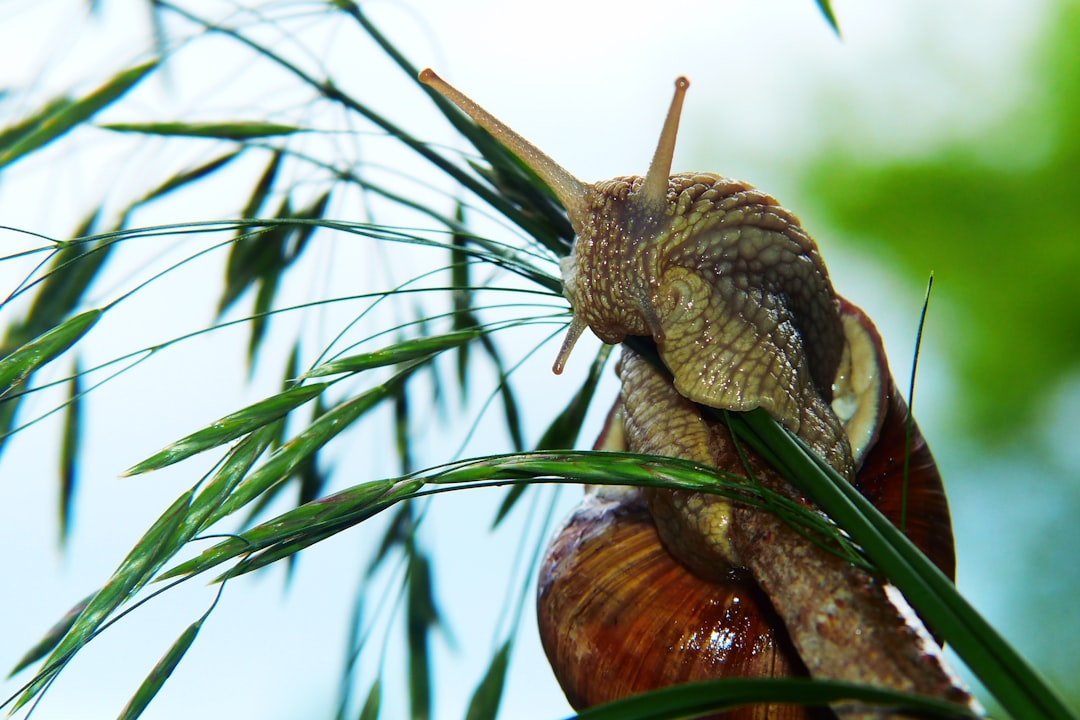
Un fait étonnant concernant les escargots géants africains est qu'ils peuvent vivre jusqu'à dix ans. Ils pondent des centaines d'œufs à la fois, ce qui contribue à leur survie. population Ils grandissent rapidement. Les bébés escargots éclosent des œufs après seulement deux semaines et commencent à se nourrir immédiatement. Les escargots portent leur maison sur leur dos et peuvent retraite À l'intérieur, elles se réfugient lorsqu'elles perçoivent un danger. Leur carapace les protège des prédateurs et des intempéries tout au long de leur vie.
Dans certains pays, les gens élèvent des escargots géants africains comme exotique Les escargots sont des animaux de compagnie. Ils sont faciles à entretenir et intéressants à observer. Cependant, leur possession est illégale dans de nombreux endroits car ils peuvent dommage Les écosystèmes locaux et les cultures sont perturbés. Une fois relâchés dans la nature, ils entrent en compétition avec les animaux indigènes pour la nourriture et l'espace. Les groupes environnementaux s'efforcent de contrôler leur propagation dans les zones où ils n'ont pas leur place.
Les scientifiques poursuivent leurs recherches sur les escargots géants africains à des fins médicales et biologique Leur mucus contient des protéines qui pourraient favoriser la cicatrisation. Dans certaines cultures, on utilise le mucus d'escargot dans des produits de beauté pour une peau plus saine. Bien que considérés comme nuisibles, ces animaux nous apprennent beaucoup sur la nature. Comprendre les escargots géants africains nous aide à protéger la faune et l'agriculture dans le monde entier.
Niveau: Niveau F
A. Association de vocabulaire
Associez chaque mot à sa définition.
1. massif ______
2. spirale ______
3. invertébrés ______
4. nocturne ______
5. adaptable ______
6. appétit ______
7. population ______
8. retraite ______
9. exotique ______
10. biologique ______
a. un motif incurvé qui s'enroule autour d'un centre
b. le nombre total d'individus d'une espèce dans une zone
c. un fort désir ou besoin de nourriture
d. inhabituel ou provenant d'un pays étranger
e. relatif aux êtres vivants et aux processus vitaux
f. se replier ou se mettre en sécurité
g. actif principalement pendant la nuit
h. animaux sans colonne vertébrale
i. capable de s'adapter aux nouvelles conditions
j. extrêmement grand en taille ou en quantité
B. Vrai ou faux
Indiquez V (Vrai) ou F (Faux) pour chaque affirmation.
- Les escargots géants africains peuvent atteindre jusqu'à huit pouces de long.
- Ces escargots sont surtout actifs pendant la journée.
- Les escargots géants africains ne se nourrissent que d'un seul type de plante.
- Les escargots peuvent vivre jusqu'à dix ans.
- Les bébés escargots éclosent après deux semaines.
- Il est légal de posséder ces escargots partout.
- La bave d'escargot peut aider à cicatriser les plaies.
- Ces escargots sont originaires d'Amérique du Sud.
- Leur carapace les protège des prédateurs.
C. Remplissez les blancs
Banque de mots : massive | nocturne | adaptable | population | retraite | exotique | appétit
- Les escargots géants africains sont des créatures _______________ qui peuvent atteindre une taille impressionnante.
- Ces escargots sont des animaux _______________ qui sont surtout actifs la nuit.
- Ce sont des mangeurs _______________ qui peuvent survivre en se nourrissant de nombreux aliments différents.
- En cas de danger, les escargots se réfugient dans leur coquille protectrice.
- Leur taille énorme en fait une menace sérieuse pour les récoltes des agriculteurs.
D. Questions de compréhension
- Quelle taille peuvent atteindre les escargots géants africains ?
- D'où proviennent à l'origine les escargots géants africains ?
- Pourquoi les agriculteurs considèrent-ils ces escargots comme des ravageurs dangereux ?
- Quelle est l'une des applications médicales que les scientifiques ont découvertes pour la bave d'escargot ?
- Pourquoi est-il illégal de posséder des escargots géants africains dans de nombreux pays ?

E. Questions de discussion
Discutez de ces questions avec un partenaire ou écrivez vos réponses.
- Aimeriez-vous avoir un escargot géant africain comme animal de compagnie ? Pourquoi ou pourquoi pas ?
- Comment pensez-vous que nous devrions contrôler les espèces envahissantes comme ces escargots ?
- Quels autres animaux pouvez-vous imaginer qui portent leur maison sur leur dos ?
📝 Cliquez pour afficher le corrigé
Vérifiez vos réponses ci-dessous.
A. Vocabulaire : 1-j, 2-a, 3-h, 4-g, 5-i, 6-c, 7-b, 8-f, 9-d, 10-e
B. Vrai/Faux : 1-T, 2-F, 3-F, 4-T, 5-T, 6-F, 7-T, 8-F, 9-T
C. Remplissez les blancs : 1-massif, 2-nocturne, 3-adaptable, 4-retraite, 5-appétit
D. Compréhension : 1. Jusqu'à 20 cm de long (taille d'une main d'adulte) ; 2. Afrique de l'Est ; 3. Ils consomment plus de 500 espèces de plantes et endommagent les cultures ; 4. Leur chair contient des protéines qui pourraient favoriser la cicatrisation ; 5. Ils perturbent les écosystèmes locaux et entrent en compétition avec les animaux indigènes.
Parcourez notre collection complète de Fiches d'exercices et ressources pédagogiques gratuites pour l'anglais langue seconde couvrant la culture taïwanaise, les sciences, l'histoire mondiale et bien plus encore.





 Français
  English
  繁體中文
繁體中文  日本語
日本語  한국어
한국어  ไทย
ไทย  Bahasa Indonesia
  Tiếng Việt