

英文重音規則 | English Word Stress: 10 Rules for Taiwan Learners (2026)
Say the word “desert” to a colleague in Taipei and you might mean the Sahara (DE-sert) or the act of abandoning something (de-SERT), depending entirely on which syllable you stress. Word stress is not decoration in English — it carries meaning. A study from Cambridge English Language Assessment found that incorrect word stress was the single biggest barrier to intelligibility for non-native English speakers, ahead of vowel errors and consonant substitutions. For Taiwanese learners, whose mother tongue uses pitch-based tones rather than rhythmic stress, this is the pronunciation gap that costs the most in real conversations.

Learning English word stress patterns helps Taiwan learners sound more natural and be understood more easily in conversation.
英文重音是什麼 | What Is Word Stress?
Every English word with two or more syllables has one syllable that receives primary stress. That syllable is pronounced with three simultaneous changes: it is louder, longer, and spoken at a slightly higher pitch than the unstressed syllables around it. The unstressed syllables often reduce to a schwa sound (/ə/), which is why “photograph” sounds like FO-tuh-graf rather than fo-TO-graph.
In dictionaries, the primary stress mark (ˈ) appears before the stressed syllable. So ˈphotograph tells you the first syllable carries the stress. Most learners in Taiwan check the pronunciation transcription but skip the stress mark entirely — and then wonder why native speakers look puzzled when they speak.
One-syllable words have no stress pattern to learn since there is only one option. Focus your energy on two-syllable and three-syllable words, where the rules below apply directly and where most comprehension problems occur.
10 英文重音規則 | 10 English Word Stress Rules
Rule 1 [規則1]: Two-Syllable Nouns and Adjectives — Stress the First Syllable
The single most reliable pattern in English: when a two-syllable word is a noun or adjective, the stress almost always lands on the first syllable.
- ˈta-ble, ˈpa-per, ˈwin-dow, ˈhap-py, ˈclev-er, ˈsim-ple
- ˈmu-sic, ˈsum-mer, ˈdoc-tor, ˈchick-en
This rule covers roughly 90% of two-syllable nouns in English. If you encounter a new word and have no other clues, stressing the first syllable is always the smart starting bet for nouns and adjectives.

Practicing word stress aloud — even exaggerating the stressed syllable — is one of the fastest ways to train your ear and mouth for natural English pronunciation.
Rule 2 [規則2]: Two-Syllable Verbs — Stress the Second Syllable
Flip the noun rule: two-syllable verbs typically carry stress on the second syllable.
- be-ˈgin, de-ˈcide, ex-ˈplain, re-ˈpeat, sug-ˈgest, ar-ˈrive
This creates a clean pairing with Rule 1. Le ˈper-mit (noun) says you need a per-ˈmit (verb). Same spelling, opposite stress. More on these pairs in Rule 6 below.
Rule 3 [規則3]: Words Ending in -tion, -sion, -cion — Stress the Syllable Before the Suffix
This is the most powerful suffix rule in English because it applies without exception. The syllable immediately before -tion, -sion, or -cion always takes the stress.
- edu-ˈca-tion, orga-ni-ˈza-tion, com-ˈple-tion, pro-ˈnun-ci-a-tion, sus-ˈpi-cion
Cover the suffix and the rule is automatic. This pattern covers thousands of academic and professional words that Taiwan learners encounter in IELTS, TOEFL, and business English contexts. Once you internalize it, stress stops feeling like a guessing game.

Suffix-based word stress rules like -tion and -ic unlock correct pronunciation patterns across thousands of English words.
Rule 4 [規則4]: Words Ending in -ic or -ical — Stress the Syllable Before -ic
Same position, different suffix: stress falls directly on the syllable before -ic ou -ical.
- e-ˈlec-tric, di-plo-ˈmat-ic, e-co-ˈnom-ic, math-e-ˈmat-i-cal, his-ˈtor-i-cal
Adding -al to an -ic word does not shift the stress: e-ˈlec-tric stays e-ˈlec-tri-cal. The stress position locks to the syllable immediately before the -ic ending, regardless of how many syllables follow it.
Rule 5 [規則5]: Words Ending in -ity, -ety, -ify — Stress the Third Syllable from the End
Count three syllables back from the end of the word: that syllable takes the stress.
- e-ˈlec-tri-ci-ty, ac-ˈtiv-i-ty, pos-si-ˈbil-i-ty, u-ni-ˈver-si-ty
This rule also explains why adding -ity to a word shifts the stress completely. Compare: ˈpos-si-ble (first syllable stressed) → pos-si-ˈbil-i-ty (third-from-last syllable stressed). The suffix pulled the stress inward. This shift trips up many learners who already knew the adjective form.
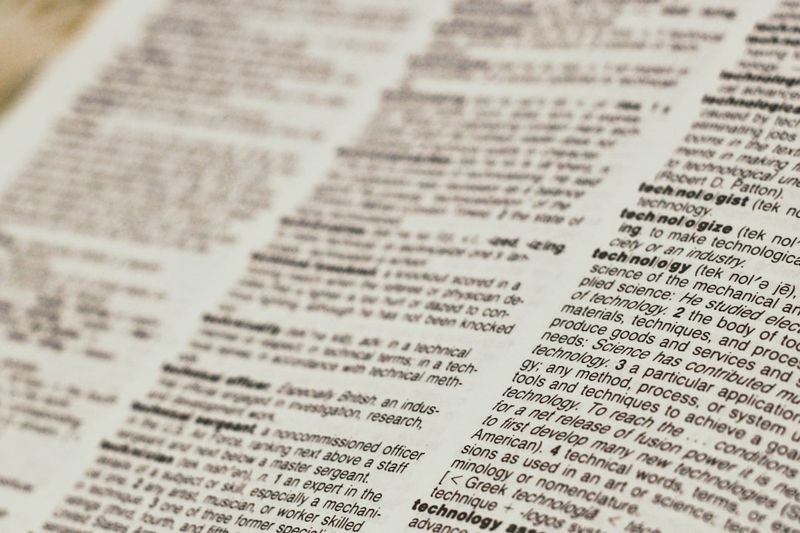
Look for the stress mark (ˈ) before the stressed syllable in any dictionary to confirm where the primary stress falls.
名詞與動詞的重音差異 | Rule 6: Noun-Verb Stress Pairs
Some of the most frequently confused words in English are pairs where the noun and verb forms have identical spelling but different stress. Get this wrong in a meeting and the confusion is immediate. There are about 75 common noun-verb pairs in English where stress is the only difference. Here are the most important ones for Taiwan learners:
| Mot | As Noun (第一音節重音) | As Verb (第二音節重音) |
|---|---|---|
| record | ˈREC-ord | re-ˈCORD |
| permit | ˈPER-mit | per-ˈMIT |
| present | ˈPRE-sent | pre-ˈSENT |
| object | ˈOB-ject | ob-ˈJECT |
| conflict | ˈCON-flict | con-ˈFLICT |
| protest | ˈPRO-test | pro-ˈTEST |
| increase | ˈIN-crease | in-ˈCREASE |
| export | ˈEX-port | ex-ˈPORT |
Memorize a sentence pairing for each one: “We need to access the ˈREC-ord” (noun) vs. “Please re-ˈCORD this meeting” (verb). Context alone does not solve the stress problem — you must already know the stress before you speak the word.
複合名詞的重音規則 | Rule 7: Compound Nouns
When two nouns combine into a single compound noun, the stress almost always falls on the first word, not the second.
- ˈBLACK-board (not black-ˈBOARD)
- ˈRAIN-coat, ˈSUN-glasses, ˈFOOT-ball, ˈBOOK-store, ˈCAR-park, ˈKEY-board
This contrasts with an adjective-plus-noun phrase, where stress falls more equally on both words: a black ˈBOARD (a board that is black) vs. a ˈBLACK-board (the classroom board). Native speakers use this stress shift to signal meaning, and missing it causes genuine confusion. For more on how words combine in English, see the guide on Compound Words: 8 Rules to Build 100+ New English Words.
Compound nouns like blackboard and sunglasses always stress the first element — a core word stress rule every Taiwan English learner needs.
Rules 8–10 [規則8-10]: Three More Patterns Worth Knowing
Rule 8: Words Ending in -ous, -eous, -ious — Stress Stays the Same as the Root Word
Adding -ous does not shift the stress position. The stress in ˈmys-ter-y stays in exactly the same position in ˈmys-te-ri-ous. Similarly: ˈglo-ry → ˈglo-ri-ous, ˈhaz-ard → ˈhaz-ard-ous. If you know the stress on the root word, the -ous form is automatic.
Rule 9: Words Ending in -ment, -ness, -less, -ful — Stress Stays on the Root
These suffixes create nouns or adjectives from existing words without moving the stress. The root word keeps its original stress: ˈhap-py → ˈhap-pi-ness, ˈbeau-ti-ful → ˈbeau-ti-ful-ness, ˈgov-ern → ˈgov-ern-ment. Learn the base form first and the suffixed form follows automatically.
Rule 10: Prefixes — Stress Falls on the Root, Not the Prefix
Common prefixes like un-, re-, dis-, pre-, over- are almost never stressed. The root word carries the stress: un-ˈhap-py, re-ˈplace, dis-a-ˈgree, pre-ˈvent, o-ver-ˈcome. One key exception: when a prefix word functions as a noun, stress can shift to the prefix — an ˈO-ver-pass (noun, the bridge) vs. to o-ver-ˈpass (verb, rare). That brings you back to Rule 6.
台灣學習者最常唸錯的英文單字 | 20 Words Commonly Mispronounced in Taiwan

These 20 high-frequency words trip up Taiwan learners because they break expected stress patterns or borrow from Chinese phonetic intuitions.
The rules above predict stress for most English words. But some high-frequency words have irregular or surprising stress that simply must be memorized. Below are 20 that come up frequently in Taiwanese English classrooms and workplaces, along with the typical error and the correct pattern:
| Mot | Common Error (Taiwan) | Correct Stress |
|---|---|---|
| photograph | pho-to-GRAPH | PHO-to-graph |
| photographer | PHO-to-gra-pher | pho-TOG-ra-pher |
| technologie | TECH-no-lo-gy | tech-NOL-o-gy |
| economy | EC-o-no-my | e-CON-o-my |
| develop | DEV-el-op | de-VEL-op |
| hospital | hos-PI-tal | HOS-pi-tal |
| important | IM-por-tant | im-POR-tant |
| interesting | in-TER-est-ing | IN-ter-est-ing |
| banana | BA-na-na | ba-NA-na |
| confortable | com-FOR-ta-ble | COMF-ta-ble (3 syllables) |
| vegetable | veg-e-TA-ble | VEG-ta-ble (3 syllables) |
| chocolate | cho-co-LATE | CHOC-late (2 syllables) |
| vocabulaire | vo-CA-bu-la-ry | vo-CAB-u-lar-y |
| environnement | en-vi-RON-ment | en-VI-ron-ment |
| disponible | AV-ail-a-ble | a-VAIL-a-ble |
| certificate | CER-ti-fi-cate | cer-TIF-i-cate |
| participate | PAR-tic-i-pate | par-TIC-i-pate |
| necessary | ne-CES-sa-ry | NEC-es-sa-ry |
| Japanese | JAP-a-nese | jap-a-NESE |
| advertisement | ad-VER-tise-ment | ad-ver-TISE-ment (AmE) |
Several of these errors come from the same source: Chinese (Mandarin) gives roughly equal weight to each character syllable, so Taiwanese speakers instinctively distribute English stress evenly across all syllables. English does not work that way. One syllable must dominate, and the others often reduce to a near-silent schwa. Recognizing this structural difference is the first step to correcting it.
英文重音練習方法 | How to Practice Word Stress

Recording yourself and comparing your stress patterns against a native speaker recording is one of the highest-ROI pronunciation drills available.
Knowing the rules and applying them in real speech are two different skills. These four approaches work specifically well for Taiwan learners:
1. Mark stress when you log new words. When you add a word to your vocabulary notes, write the stressed syllable in capitals or add a dot above it: pho·TOG·ra·pher. Review pronunciation every time you review the word — not just the spelling. This single habit closes most of the gap within three to four weeks of consistent practice. For a structured vocabulary system that builds on this, see the IELTS & TOEFL Academic Vocabulary guide.
2. Use dictionary audio, not just transcription. Forvo.com has real recordings from native speakers for almost every English word. Hearing the stress is more reliable than reading it. The Oxford Learner’s Dictionary also provides both British and American stress patterns side by side, which matters because a handful of words (like advertisement) have different stress in each variety.
3. Tap it out. Say the word out loud while tapping your hand: tap hard on the stressed syllable and lightly on the others. PER-mit → HARD-soft. de-VEL-op → soft-HARD-soft. Physical feedback anchors the stress pattern in a way that reading alone cannot replicate. Do this 10 times per new word and the stress becomes automatic.
4. Record and compare. Record yourself reading 10 sentences with target vocabulary, then play back a native speaker recording of the same content. The gap between your stress pattern and theirs becomes immediately audible — you will hear it before you can consciously analyze it. Correct what you hear, not what you thought you said. For more on how words pair naturally in English, the guide on English Collocations and Word Pairing builds directly on stress awareness.
English word stress is predictable far more often than learners realize. Once these 10 rules are internalized, you have a working framework for pronouncing unfamiliar words — not perfectly every time, but correctly far more often than guessing. The mispronunciation table above makes a strong first drilling set: read each word aloud with the correct stress before moving on. Within two weeks of consistent 10-minute daily practice, the patterns start to feel automatic rather than effortful.
Watch: Word Stress Rules Explained
This video breaks down the most important English word stress rules with clear audio examples — useful for hearing the patterns before applying them in speech:
Sources
- Cambridge English Language Assessment — Research on intelligibility barriers for non-native English speakers, including word stress.
- Oxford Learner’s Dictionary — Stress mark notation, IPA transcription standards, and British/American pronunciation comparison.
- Forvo Pronunciation Dictionary — Native speaker audio recordings used to verify stress patterns in the mispronunciation table.





 Français
  English
  繁體中文
繁體中文  日本語
日本語  한국어
한국어  ไทย
ไทย  Bahasa Indonesia
  Tiếng Việt