Ordering Food in English: Restaurant Phrases Guide | 點餐英文
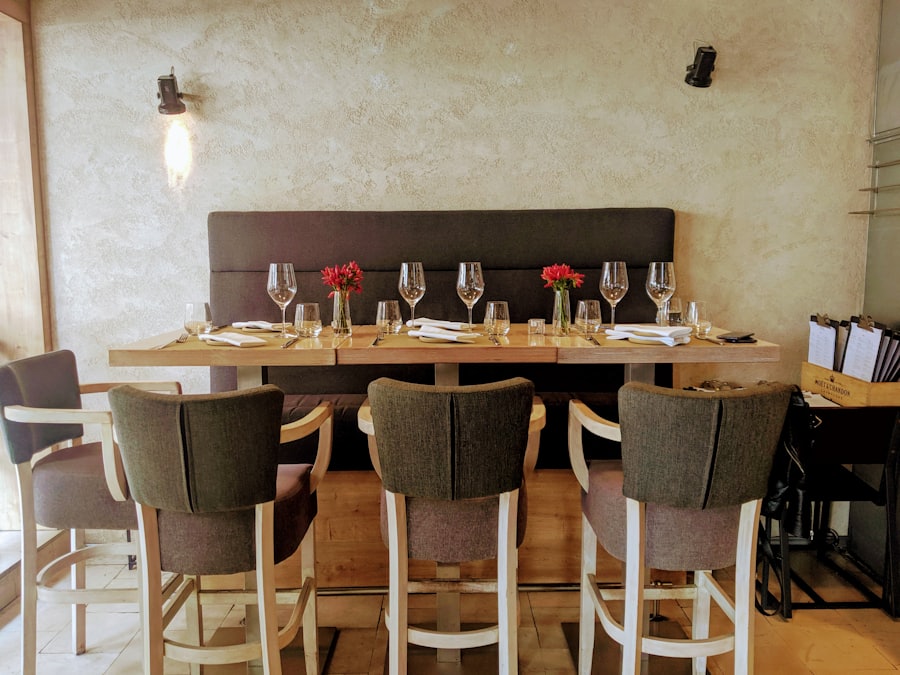
Ordering food in English (點餐英文) doesn’t have to feel stressful. Whether you’re traveling abroad (出國旅遊) or practicing for an upcoming trip, learning a handful of key restaurant phrases (餐廳常用句型) can transform your dining experience (用餐體驗). This guide walks you through every step — from making a reservation (訂位) to paying the bill (結帳) — with practical sentences you can start using right away. Many Taiwanese students (台灣學生) find these phrases surprisingly easy to memorize once they see them in context.
By the end, you’ll have over 50 ready-to-use English phrases for restaurants (餐廳英文), plus a full practice dialogue (對話練習) and cultural tips (文化小知識) that most textbooks skip.
How to Make a Restaurant Reservation in English (餐廳訂位英文教學)

In many Western countries (西方國家), making a reservation is standard — especially at upscale restaurants (高檔餐廳). You can call ahead (打電話) or book online (線上預訂). Here are the most common reservation phrases (最常用的訂位句型):
Reservation Phrases (訂位常用句)
- “I’d like to make a reservation for [number] at [time].”
Example: “I’d like to make a reservation for four at 7 PM tonight.” - “Do you have a table available for [number]?”
Example: “Do you have a table available for two?” - “I have a reservation under [name].”
Example: “I have a reservation under Chen.”
Walk-In Phrases (沒有訂位時)
If you didn’t book ahead and need to walk in (直接入場), try these:
- “Hi, table for two, please.”
- “How long is the wait?”
- “Can we sit by the window / outside / at the bar?”
💡 Tip: In the US and Canada, the person who seats you is called a host or hostess. They’ll say “Right this way” or “Your table is ready.”
Reading the Menu and Asking Questions (看菜單與詢問英文)
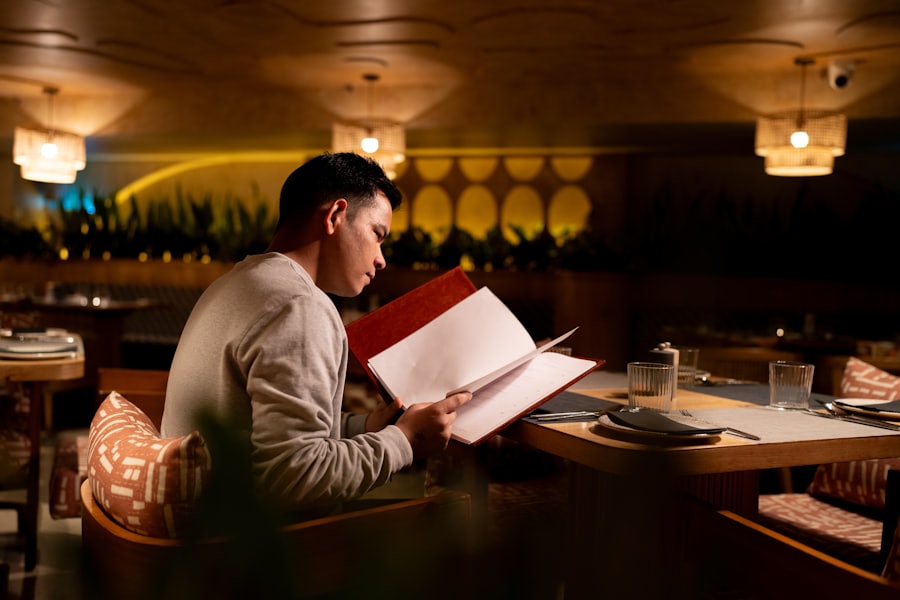
Once you receive the menu (菜單), take your time. Most English menus are divided into these sections:
Common Menu Sections
- Appetizers / Starters — small dishes before the main course (前菜)
- Soups & Salads — lighter options (湯品與沙拉)
- Main Course / Entrées — the main dish (主菜). Note: in American English, “entrée” means main course, but in French and some European countries it refers to the starter!
- Side Dishes / Sides — extra dishes served alongside mains (配菜)
- Desserts — sweet dishes after the meal (甜點)
- Beverages / Drinks — all drink options (飲料)
- Specials / Today’s Special — dishes available for a limited time (今日特餐)
How to Ask About the Menu
- “What do you recommend?”
- “What’s the most popular dish here?”
- “What’s in the [dish name]?”
- “Is this dish spicy?”
- “Does this contain nuts / dairy / gluten?”
- “Can I get this without onions?”
💡 Allergy Tip: If you have a food allergy (食物過敏), always tell your server clearly: “I’m allergic to [food]. Does this dish contain any [food]?” Servers (服務生) in English-speaking countries (英語系國家) are very used to this question — don’t be shy about asking!
Essential Phrases for Ordering Food in English (點餐英文必備句型大全)
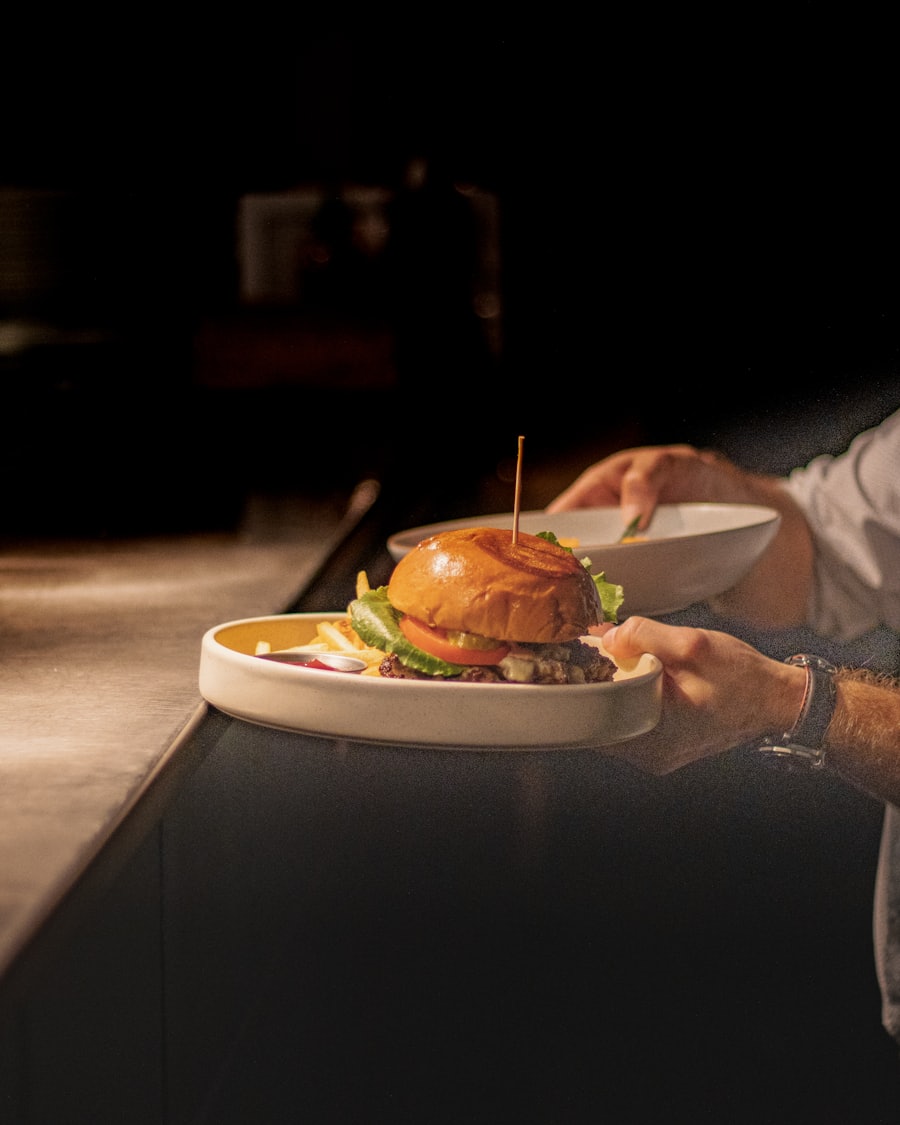
When the server comes over and asks “Are you ready to order?” — here are the phrases you need. Mastering these ordering phrases (點餐句型) will make you feel much more confident:
Ordering Your Food
- “I’ll have the [dish], please.” — the most natural way to order (最自然的點餐說法)
- “I’d like the [dish].” — slightly more formal (稍微正式一點)
- “Can I get the [dish]?” — casual and common (輕鬆常見的說法)
- “For my main, I’ll go with the [dish].” — when ordering courses separately (分開點菜時)
- “Could I have a glass of water, please?” — polite request (禮貌請求)
How to Order Steak (牛排怎麼點)
When you order steak, the server will ask “How would you like your steak?” Your options:
- Rare — seared outside, red inside (外熟內紅) (一分熟)
- Medium rare — the most popular choice (最受歡迎的熟度) (三分熟)
- Medium — pink center (中心粉紅色) (五分熟)
- Medium well — slightly pink (微粉紅色) (七分熟)
- Well done — fully cooked through (完全熟透) (全熟)
Example: “I’ll have the ribeye steak, medium rare, please.”
Ordering for Others
Need to order for friends or family (幫別人點餐)? Use these:
- “She’ll have the pasta.”
- “He’d like the fish and chips.”
- “We’ll share the appetizer platter.”
Useful English Phrases During the Meal (用餐過程中常用英文)
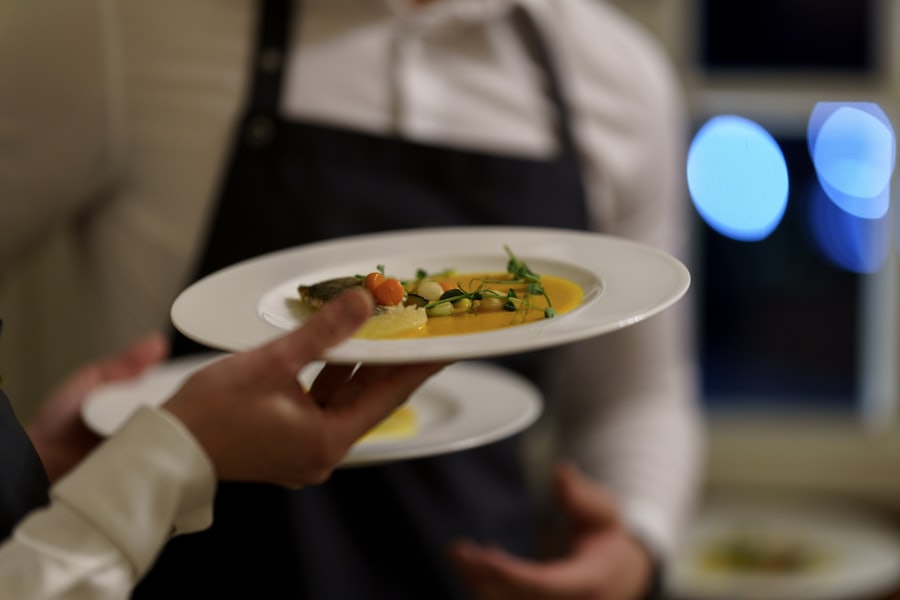
During the meal (用餐過程中), you may need to interact with your server. Here are common situations (常見情境) and what to say:
When You Need Something
- “Excuse me, could I have some more water?”
- “Can we get some extra napkins, please?”
- “Could I have another fork? I dropped mine.”
- “Is it possible to turn down the music?”
When There’s a Problem With Your Order
If something goes wrong with your food (餐點有問題), politely let the server know:
- “Excuse me, I think this isn’t what I ordered.”
- “I’m sorry, but this steak is overcooked / undercooked.”
- “This dish is cold. Could you heat it up?”
- “There’s a hair in my soup.”
💡 Politeness Tip: Using “could” and “would” sounds more polite than “can” and “will”. Compare: “Can I have water?” (direct) vs. “Could I have some water, please?” (much more polite). This small change makes a big difference in how you come across. Politeness (禮貌) is key in English conversation (英文對話).
What the Server Might Say to You
- “How is everything?” — You can reply: “Everything is great, thanks!”
- “Can I get you anything else?” — Common check-in phrase (常見關心用語)
- “Are you still working on that?” — An American way of asking if you’re still eating (美式問法,詢問你是否還在吃)
- “Would you like to see the dessert menu?” — Your cue to order dessert (暗示你可以點甜點了)
Ordering Drinks and Coffee in English (點飲料與咖啡英文會話)
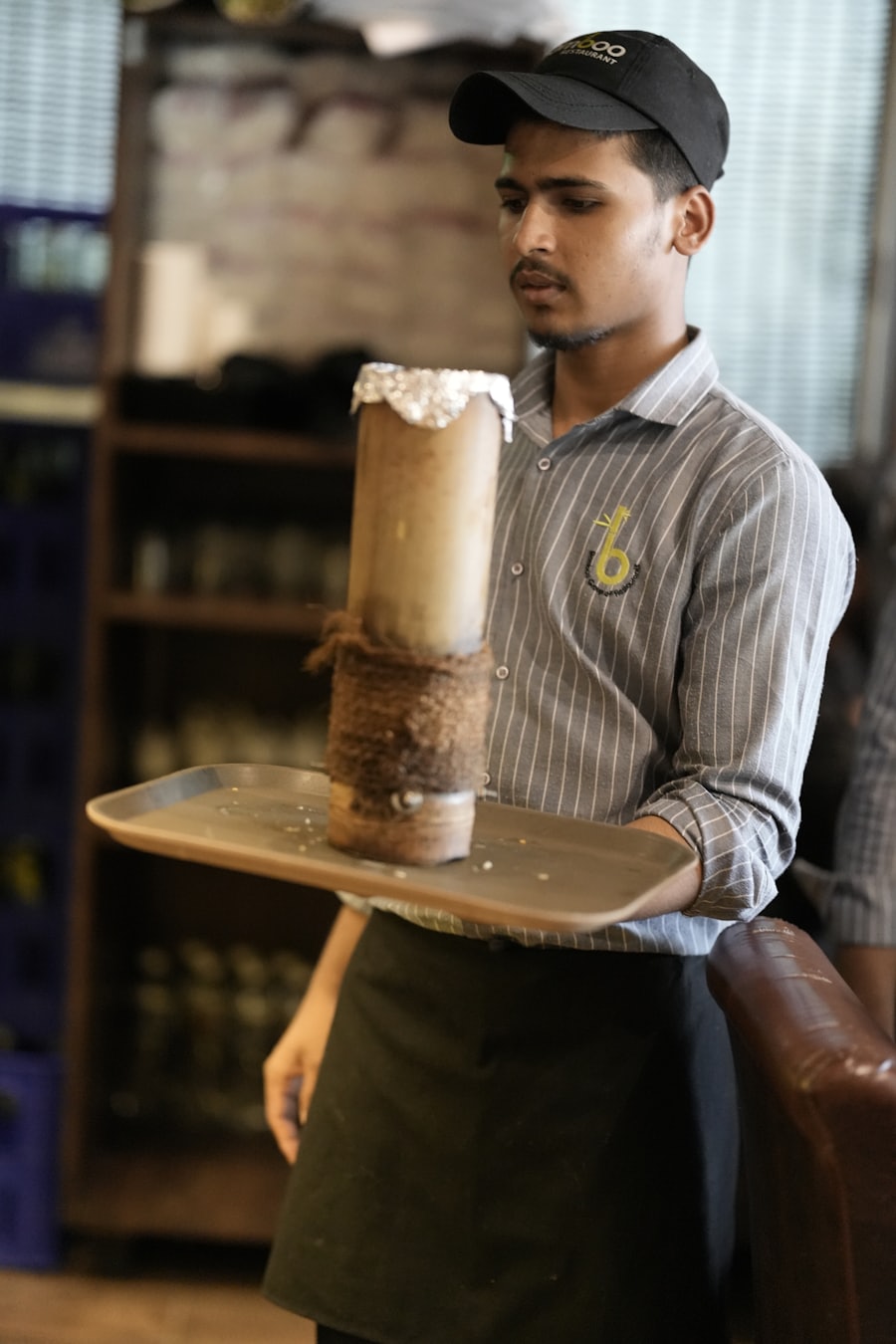
Ordering drinks (點飲料) has its own vocabulary. Here are the key terms (關鍵字彙) you should know:
Common Drink Vocabulary
- Still water — regular, non-carbonated water (一般水)
- Sparkling water — carbonated water (氣泡水)
- Tap water — water from the faucet (free in most Western restaurants!)
- Soft drink / Soda — carbonated sweet drinks like Coke or Sprite (汽水)
- Draft beer / Beer on tap — freshly poured from a keg (生啤酒)
- A glass of house wine — the restaurant’s featured wine (招牌葡萄酒)
- Iced tea — cold tea, very popular in the American South (冰茶,美國南方很流行)
Ordering at a Coffee Shop (咖啡廳點餐)
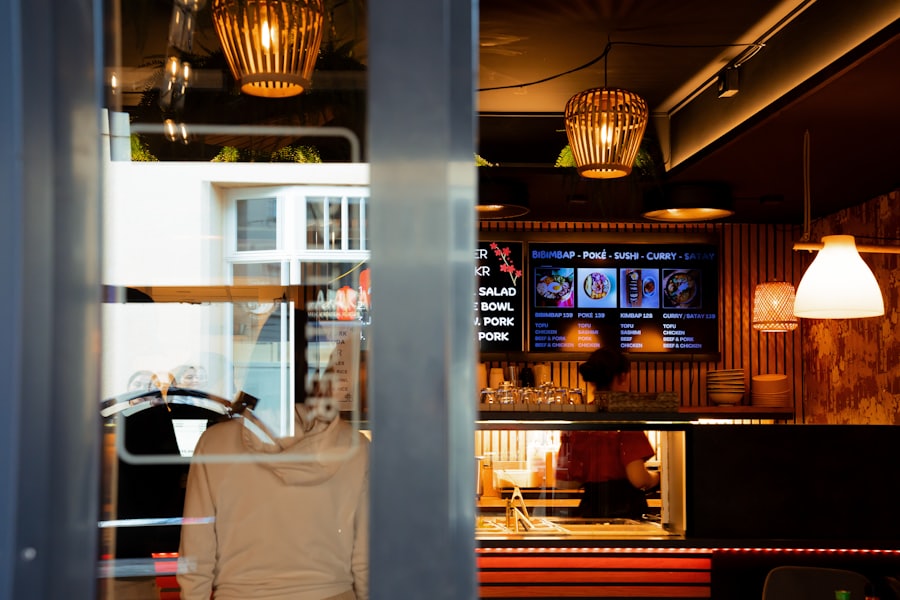
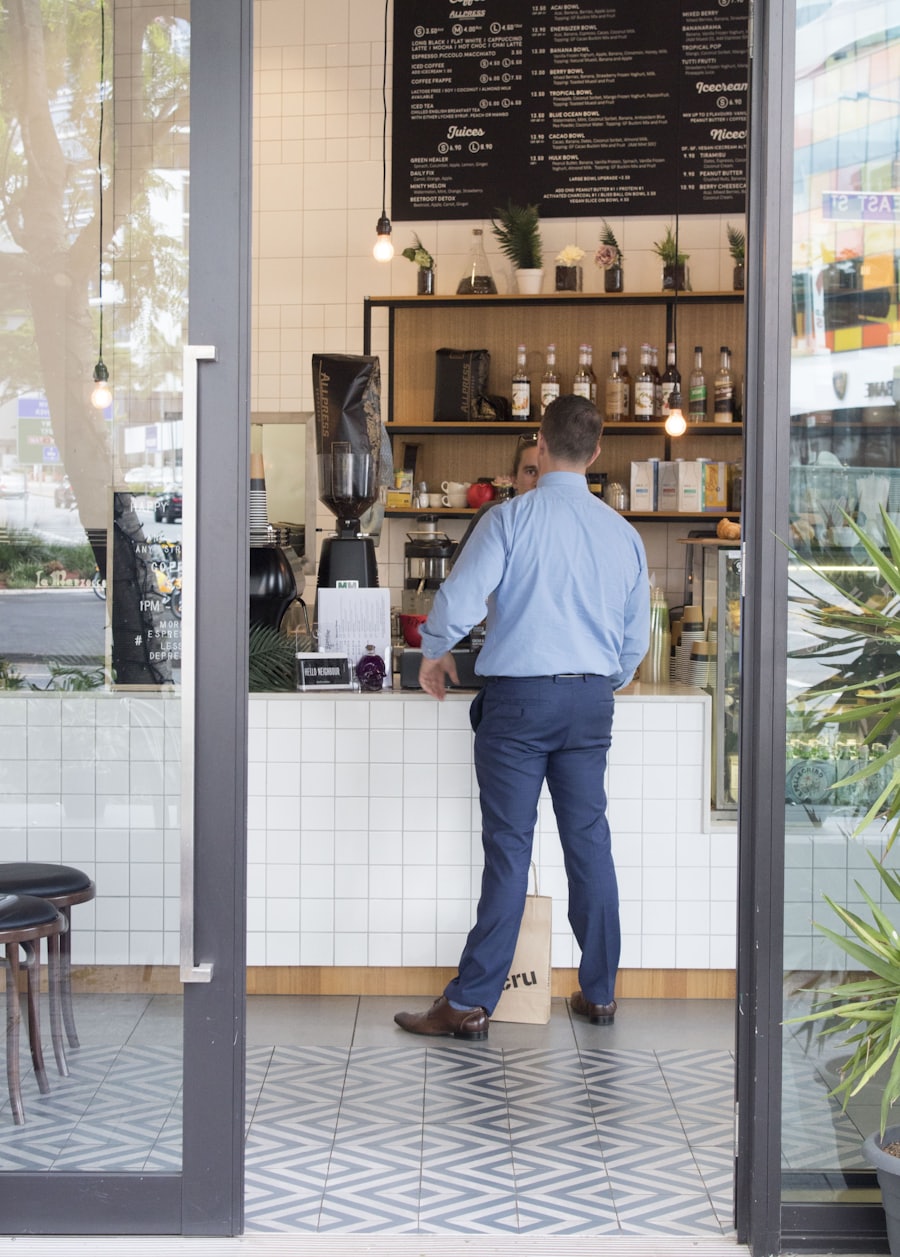
Coffee shops (咖啡廳) abroad can feel different from what you’re used to in Taiwan (台灣). Here are the most useful phrases:
- “I’ll have a latte with oat milk, please.”
- “Can I get a large Americano, iced?”
- “For here or to go?” — The barista will ask this (內用還是外帶)
- “For here, please.” / “To go, please.”
💡 Fun Fact: In the UK and Australia, they say “takeaway” instead of “to go.” So if you’re in London, say “Takeaway, please” to sound like a local! In Canada, ordering a “double-double” at Tim Hortons means two cream, two sugar.
📺 Watch and Learn: Restaurant English Practice
Want to hear native speakers use these restaurant phrases in action? Watch this helpful tutorial video for real-life ordering food in English practice:
This video walks you through a full restaurant conversation from arrival to payment. Pair it with the phrases in this article for maximum learning impact.
Paying the Bill and Tipping Guide (結帳付款與小費英文指南)
After your meal (用餐結束後), you’ll need to ask for the bill. In Western countries, servers usually don’t bring it automatically (不會主動送帳單) — you need to request it:
Paying Phrases (結帳常用句)
- “Can I have the bill / check, please?” — British English uses “bill” (帳單), American English uses “check” (支票/帳單)
- “We’d like to pay, please.”
- “Can we split the bill?” — asking to pay separately (各付各的) (分開付)
- “I’ll get this.” / “It’s on me.” — offering to pay for everyone (請客)
- “Do you take credit cards?”
- “Can I pay by card / cash?”
Tipping Culture Around the World (小費文化)
Taiwan doesn’t have tipping culture (小費文化), but in the US, tipping is expected. Here’s a quick guide:
- United States: 15-20% is standard. Great service (優質服務)? Leave 20% or more.
- Canada: Similar to the US — 15-20%.
- United Kingdom: Usually 10-15%, but many restaurants add a service charge automatically.
- Australia / New Zealand: Tipping is not expected, though small tips for excellent service are appreciated.
- Japan: Do not tip! It can actually be seen as rude.
At the card machine, you’ll often see tip options — typically 15%, 18%, 20%, or a custom amount. The server may also ask: “Would you like to add a tip?”
Full Practice Dialogue: Ordering Food in English (完整餐廳英文對話練習)
Let’s put all the phrases together in a complete restaurant conversation (完整餐廳對話) you can practice out loud:
🧑 You: “Hi, table for two, please.”
🧑🍳 Host: “Sure! Right this way. Here are your menus.”
🧑 You: “Thank you.”
(A few minutes later)
🧑🍳 Server: “Hi there! Can I start you off with any drinks?”
🧑 You: “Yes, I’ll have an iced tea, and she’ll have a lemonade.”
🧑🍳 Server: “Great choice. Are you ready to order, or do you need a few more minutes?”
🧑 You: “We’re ready. I’d like the grilled salmon with a side salad, please. And she’ll have the mushroom risotto.”
🧑🍳 Server: “Excellent. How would you like your salmon — grilled or pan-seared?”
🧑 You: “Grilled, please.”
🧑🍳 Server: “Perfect. I’ll get that started for you.”
(After the food arrives)
🧑🍳 Server: “How is everything?”
🧑 You: “It’s delicious, thank you! Could we get some more water when you have a chance?”
🧑🍳 Server: “Of course! I’ll be right back.”
(At the end of the meal)
🧑 You: “Excuse me, can we have the check, please?”
🧑🍳 Server: “Sure, here you go.”
🧑 You: “Can I pay by card?”
🧑🍳 Server: “Absolutely. I’ll bring the card reader.”
🧑 You: “Thank you. The food was wonderful.”
🧑🍳 Server: “Glad you enjoyed it! Have a great evening.”
10 Must-Know Restaurant Vocabulary Words (十個餐廳英文必備單字)
Memorize these essential restaurant words (餐廳必備單字) and you’ll feel confident ordering food in English anywhere:
- Reservation (預訂) — “I have a reservation for 7 PM.”
- Appetizer (前菜) — “Let’s start with an appetizer.”
- Entrée (主菜, American usage) — “What’s your most popular entrée?”
- Side dish (配菜) — “What sides come with the steak?”
- Beverage (飲料) — “Can I see the beverage menu?”
- Server / Waiter / Waitress (服務生) — “Our server was very friendly.”
- Bill / Check (帳單) — “Check, please.”
- Tip / Gratuity (小費) — “I left a 20% tip.”
- Takeout / Takeaway (外帶) — “I’d like this to go.”
- Doggy bag (打包袋) — “Can I get a doggy bag for the leftovers?”
5 Common Ordering Mistakes to Avoid (台灣人常犯的點餐英文錯誤)
Here are the most common mistakes (常見錯誤) Taiwanese learners (台灣英語學習者) make when ordering food in English — and how to fix them:
❌ “I want a coffee.”
✅ “I’d like a coffee, please.” / “Can I have a coffee?”
“I want” sounds blunt. “I’d like” or “Can I have” sound much more natural and polite.
❌ “Give me the menu.”
✅ “Could I see the menu, please?”
“Give me” sounds like a command. “Could I” is much more polite.
❌ “How much money?”
✅ “How much is this?” / “Can I have the check?”
“How much money” sounds unnatural in English.
❌ “I am full.” (grammatically correct, but less natural)
✅ “I’m stuffed.” / “I couldn’t eat another bite.”
These are more natural ways to say you’ve eaten enough.
❌ “No, I don’t need.”
✅ “No, thank you. I’m fine.” / “No, thanks. That’ll be all.”
Always add “thank you” when declining — it sounds much more natural.
American vs. British Restaurant English (美式與英式餐廳英文用語差異)
The same concepts have different names (不同說法) depending on which English-speaking country you’re visiting. Here’s a quick reference chart:
- Check (American) vs. Bill (British) — the receipt for your meal (用餐帳單)
- Entrée (American, main dish) vs. Main course (British)
- To go (American, takeout) vs. Takeaway (British)
- Fries (American) vs. Chips (British)
- Cookies (American) vs. Biscuits (British)
- Appetizer (American) vs. Starter (British)
Cultural Etiquette Tips
In American restaurants, servers check on you frequently — asking “How is everything?” or “Can I get you anything else?” This is normal service culture, not pressure to leave (不是在催你走). In Europe, servers generally give you more space (保持適當距離) and only come when called.
In Taiwan and Japan, restaurants often have a call button or you raise your hand to get the server’s attention. In Western countries, make eye contact and say “Excuse me” — never shout across the restaurant (絕對不要大聲喊叫). A polite gesture and a smile work everywhere.
Another cultural difference worth noting: in Taiwan and many Asian countries, making sounds while eating soup or noodles is perfectly normal. In Western formal restaurants, eating quietly is the expectation. Neither approach is right or wrong — just different cultural norms (只是不同的文化習慣).
Practice Scenarios: Test Your Restaurant English
Try answering these situations (情境練習) in English before checking the suggested responses:
Scenario 1: You and a friend walk into an Italian restaurant (義大利餐廳) with no reservation. What do you say to the host?
Answer: “Hi, do you have a table for two? We don’t have a reservation.”
Scenario 2: You’re allergic to peanuts (花生過敏) and want to order pad thai (泰式炒河粉). How do you check with the server?
Answer: “I’m allergic to peanuts. Does the pad thai contain any peanuts? Can I get it without peanuts?”
Scenario 3: After dinner (晚餐後), you want to split the bill with a friend and pay by credit card (信用卡). What do you say?
Answer: “Can we have the check, please? We’d like to split the bill. Can I pay by card?”
If you nailed all three, you’re ready to order food in English with confidence! Practice speaking these phrases out loud (大聲練習) — your English doesn’t need to be perfect to get your point across. Communication is success (溝通就是成功)!. Servers are patient (有耐心的) and happy to help, even if you stumble over a word or two.
For more practical English phrases (實用英文片語), check out our guide on Business English Email Phrases or explore 10 Essential Daily English Phrases for everyday conversations. Happy dining! 🍽️
Sources
- FluentU — How to Order Food in English
- Berlitz — How to Order Food in English: 104 Useful Words
- Speak Languages — English Phrases at a Restaurant
Looking for free ESL worksheets for your classroom? Browse our free worksheet library →
Are you a teacher? Find lesson resources and worksheets at TahricTeaches.com.





 English
  繁體中文
繁體中文  日本語
日本語  한국어
한국어  ไทย
ไทย  Bahasa Indonesia
  Tiếng Việt
  Français