

Make, Do, Take, Have: Verb Collocations for Taiwan Professionals (2026) | 英文動詞搭配詞用法完整解析
本文重點: 為什麼台灣上班族常在 “make a decision” 和 “do a decision” 之間猶豫?本指南深入解析英文動詞搭配詞 (collocations) 中最常混淆的四個動詞 — make、do、take、have — 幫助商業英文學習者擺脫中式直譯,提升職場溝通的自然度。內容適合準備多益 (TOEIC)、雅思的考生,以及每天需要寫英文 email 的台灣專業人士。
You studied English for over a decade. Your grammar is solid, your vocabulary is wide, and yet — when a foreign client asks a question in a meeting — you hesitate. Should you say “make a decision” or “do a decision”? “Take a chance” or “have a chance”? The hesitation isn’t a vocabulary gap. It’s a collocation (搭配詞) gap, and it’s the single biggest reason Taiwan professionals (台灣上班族) sound textbook-stiff instead of fluent.
This guide skips the listicle of 50 phrases. Instead, we will dig into the four most overloaded verbs in English — make, do, take, et have — and explain the logic behind which noun pairs with which verb. Once you understand the pattern, you will stop translating from Chinese 做 or 拿 and start choosing the right English verb by feel.

Why Direct Translation Fails | 為什麼中式直譯行不通
Mandarin Chinese has a small group of high-frequency verbs that cover an enormous range of meanings. The verb 做 can be used for nearly anything: 做決定, 做運動, 做生意, 做朋友. When Taiwanese learners reach for the English equivalent, the brain reaches for “do” — and that’s where the trouble starts. English splits these meanings across at least four different verbs based on subtle distinctions of creation, performance, possession, and movement.
A collocation is simply a pair of words that native speakers expect to hear together. “Heavy rain” sounds right; “strong rain” sounds wrong, even though both are grammatically valid. Verb collocations are the most punishing category because the wrong choice doesn’t just sound odd — it sometimes changes the meaning entirely. “Make a bed” (整理床鋪) and “do a bed” (gibberish) are not interchangeable.
The good news: each of the four verbs we cover here has an underlying logic. Once you internalize the logic, the right collocation will start to feel obvious — even for nouns you’ve never paired before.
The Make vs Do Divide | Make 與 Do 的分界
This is the dividing line that trips up almost every learner. The rule of thumb that actually works in 90% of cases: use “make” when something new is created or produced; use “do” when an existing task or activity is performed.
When to Use Make | 何時使用 Make
Make is the verb of creation. A decision did not exist before you made one. A plan, a proposal, an offer, a phone call, a mistake, a profit, a difference — all of these come into being because of your action. In business English (商業英文), watch for these high-frequency pairings: make a decision, make a suggestion, make an appointment, make a payment, make progress, make an effort, make sense, make money, make an exception.
Notice the pattern. Each noun represents something that didn’t exist until the action happened. You didn’t have an appointment yesterday; today you made one. There was no payment in the system; you made it appear.
When to Use Do | 何時使用 Do
Do is the verb of performance. The activity already exists as a category; you are simply executing it. Do business, do homework, do research, do the laundry, do the dishes, do exercise, do a favor, do your best, do harm, do damage. Business already exists in the world — you do it. Research is a known activity — you do it.
Two useful sub-rules: do tends to pair with chores and routine tasks (do the cleaning, do the cooking), and do is the default for vague or general references (do something, do anything, do nothing). When the noun is non-specific, reach for do.
The Tricky Overlap | 容易搞混的灰色地帶
A handful of expressions feel like exceptions. We say “do a presentation” but “make a presentation” is also acceptable in some contexts. “Do a deal” is informal; “make a deal” is standard. Don’t waste energy memorizing every edge case. Apply the create-vs-perform rule, and when in doubt, search the phrase in quotation marks in Google to see which version returns more results.
Take: The Verb of Action and Choice | Take: 行動與選擇的動詞
Take is the verb Taiwan learners under-use, often substituting “have” or “do” instead. In English, take signals a deliberate action, especially one involving choice, movement, or measurement. You take action, take a break, take notes, take a chance, take responsibility, take a look, take a seat, take medicine, take a photo, take a shower.

Two patterns to lock in. First, take pairs with short, time-limited activities: take a break, take a walk, take a nap, take a moment. Second, take pairs with deliberate choices that carry consequences: take a risk, take a stand, take credit, take the blame. If the noun involves stepping forward into a decision, take is almost always right.
One Taiwan-specific pitfall: in meetings, professionals often say “I will do notes” or “I will have notes.” The natural collocation is “I will take notes.” Practice that one phrase until it’s automatic — it appears in nearly every business meeting (商業會議) you will ever attend.
Have: Beyond Possession | Have: 不只是「擁有」
Most Taiwanese learners associate have with possession — I have a car, I have a meeting tomorrow. But have has a second, equally important use: have is the verb of experiencing an event or activity. You have a meeting (you experience it). You have a conversation, have lunch, have a discussion, have a problem, have an idea, have fun, have a good time, have an impact, have an effect.
This is where Chinese-English contrasts get interesting. In Mandarin, you would say 開會 (literally “open meeting”) for the act of holding a meeting. In English, you don’t “open” a meeting; you have one. Similarly, 吃午餐 becomes “have lunch,” not “eat lunch” in most polite contexts. (Eat lunch is grammatically fine, but “have lunch” sounds more natural in invitations: “Let’s have lunch next week.”)
A practical filter: if the noun describes a shared social or professional experience — a meeting, a conversation, a meal, an argument, a celebration — “have” is almost always the right verb. Reserve “do” for solitary task-performance.
The Get Trap | Get 的陷阱
Get is not strictly part of the make/do/take/have family, but it deserves a mention because it absorbs collocations from all four verbs in informal English. You can “get permission” instead of “have permission,” “get a chance” instead of “take a chance,” “get results” instead of “make results.” In casual business contexts — Slack messages, internal chats, quick calls — get often replaces the more formal verb.
The risk for Taiwan professionals: overusing get can make formal writing sound sloppy. In a client-facing email, write “I would like to schedule a meeting” rather than “Can we get a meeting?” In a TOEIC writing section (多益寫作), prefer the precise verb. Save get for genuinely conversational contexts.
Building a Collocation Habit | 建立搭配詞的學習習慣
Knowing the rules is one thing; using them automatically is another. The gap between recognition and production is where most learners stall. Three habits compress that gap faster than any classroom drill.
Read in Chunks, Not Words | 用詞組閱讀,不要逐字
When you read English news or emails, force yourself to notice verb+noun pairs as single units. Highlight them physically in a notebook. Over time, your brain starts to store “make a decision” as one chunk rather than two separate words, and recall becomes instant.
Use a Collocation Dictionary | 使用搭配詞字典
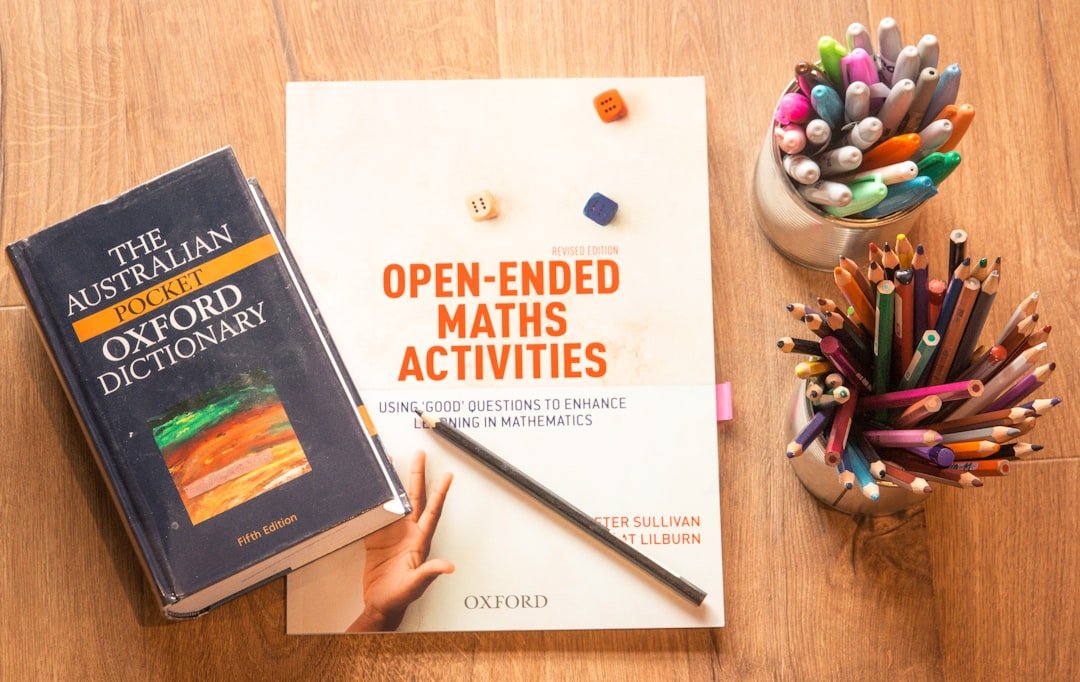
A regular English-Chinese dictionary tells you what a noun means; a collocation dictionary tells you which verbs and adjectives naturally go with it. The Oxford Collocations Dictionary and the free online Ozdic are the two most cited resources. Before sending an important email, paste your verb+noun pairs into Ozdic and check.
Shadow Native Audio | 跟讀母語者錄音
Shadowing — listening and repeating in real time — burns collocations into your mouth muscles. Pick a five-minute clip from a podcast like the BBC Learning English Business English series and shadow it five times. Don’t translate, don’t analyze — just mimic. After a week, you’ll catch yourself saying “have a quick chat” without consciously choosing the verb.
When to Trust Your Ear | 何時相信你的語感
The final stage of collocation mastery is intuition. After enough exposure, the wrong verb will simply sound wrong, the way “strong rain” sounds off to a native speaker. Until you reach that stage, don’t trust your ear — trust the dictionary and the rules in this guide.
One signal that your intuition is forming: you start to feel uncomfortable when you hear another Taiwanese speaker say “do a decision.” That discomfort means your brain has stored the native pattern. Lean into it. Politely correct colleagues if they ask, and keep reading and shadowing daily. Within six months, the four verbs we covered today will feel as natural as breathing — and your written and spoken English will sound dramatically more native (聽起來更道地).
Sources | 參考資料
- Oxford Learner’s Dictionaries — authoritative reference for English collocations and example sentences.
- Conseil britannique — Learn English resources, including business English collocation guides.
- Cambridge University Press — publisher of the Cambridge English Collocations in Use series.
- BBC Learning English — free podcasts and shadowing material for business English learners.
Looking for free ESL worksheets for your classroom? Browse our free worksheet library →
Are you a teacher? Find lesson resources and worksheets at TahricTeaches.com.




 Français
  English
  繁體中文
繁體中文  日本語
日本語  한국어
한국어  ไทย
ไทย  Bahasa Indonesia
  Tiếng Việt